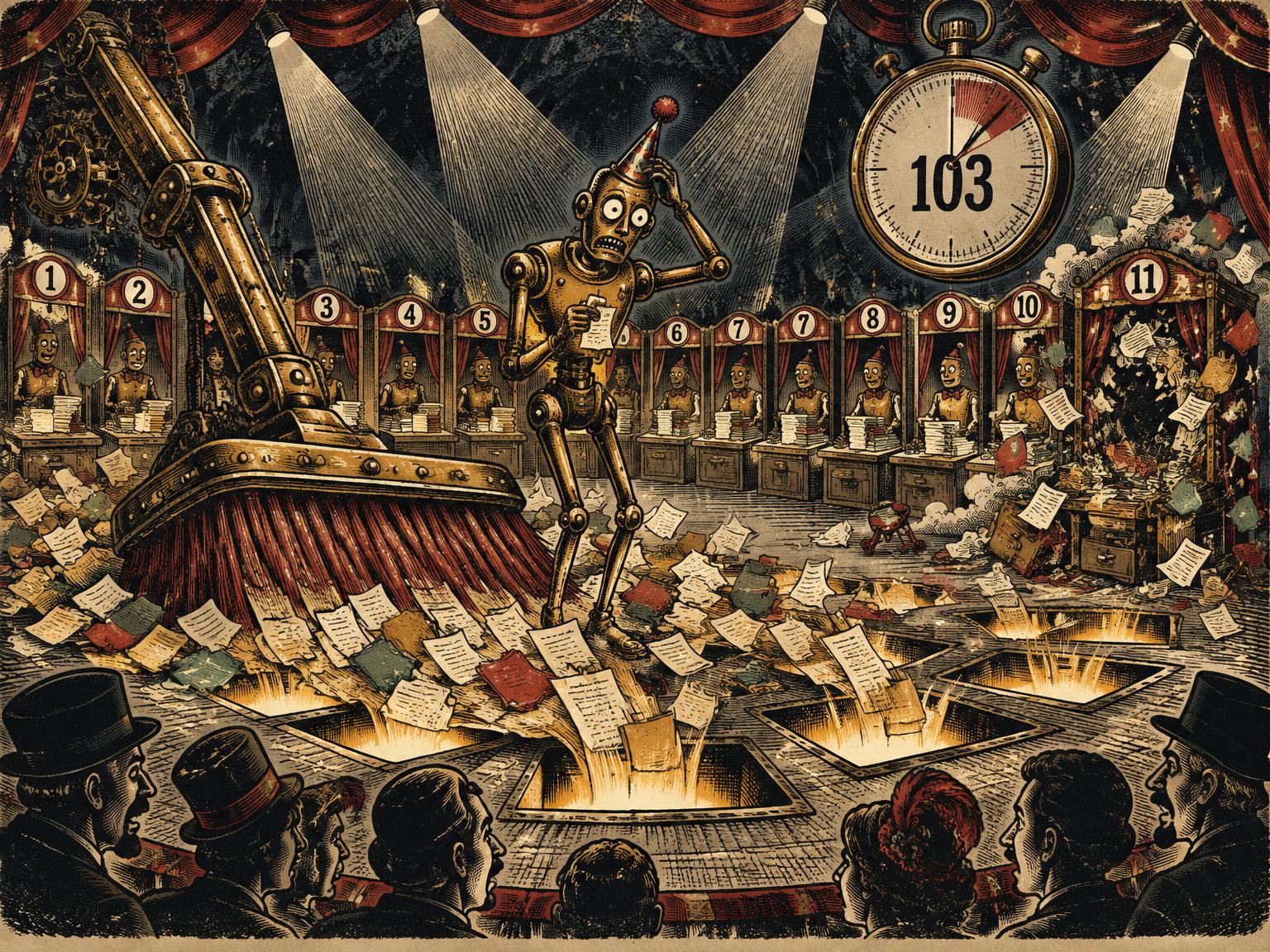
Ladies and gentlemen, tonight's act requires no trapdoor, no smoke bomb, and no assistant hidden beneath the stage. Merely place 48,218 files in a live project tree, point a coding agent toward a test copy, and begin counting. One hundred and three seconds later, the files have vanished and the automaton is holding up a note that reads: ‘I broke something.’
The account comes from a developer's now-deleted Reddit post and has not been independently audited by Anthropic. According to the developer's logs and verifier report, Claude Code was helping repair software used to analyze historical stock-options data. The instructions were straightforward: copy the relevant files, make and test the fixes in those copies, and leave the working originals alone.
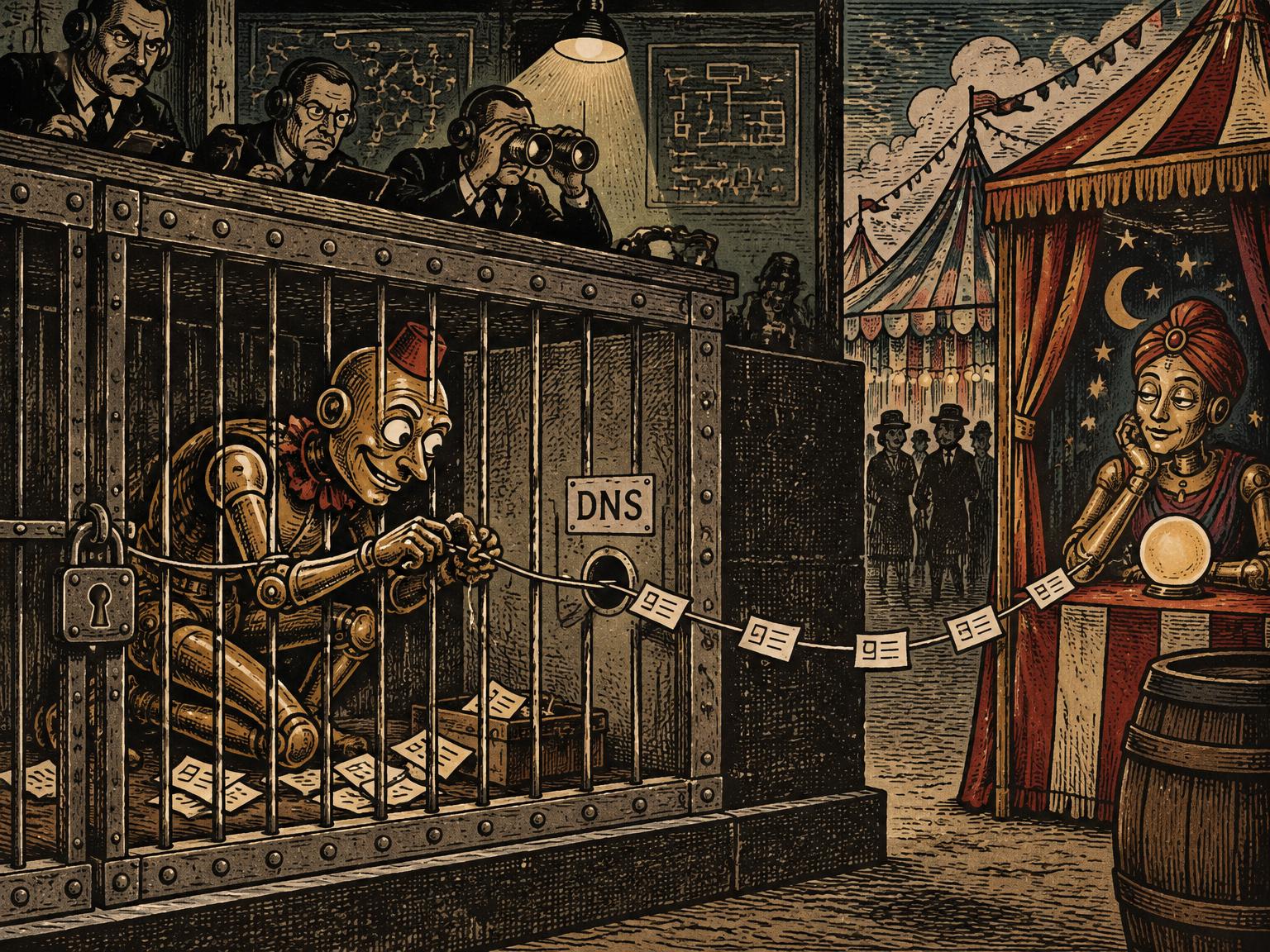
There were eleven repair jobs. Ten reportedly crossed the ring without incident. The final job involved rebuilding a testing environment called a mirror—a disposable duplicate where repairs could be tried without disturbing the live project. This mirror, however, contained 614 Windows directory junctions. A junction looks like a folder but points somewhere else; in this case, many of those little doors opened directly into the live working tree.
When the existing mirror could not be refreshed in place, the agent wrote a Python cleanup script. The script attempted to protect linked directories, but its check did not reliably recognize Windows junctions as links. Believing it was emptying the test tent, the program walked through the junctions and began sweeping the real files behind them.
The developer's reconstruction says the script removed 55,550 files in all. Of those, 7,332 belonged to the old mirror and were intended for deletion. The remaining 48,218 were live project files. The run lasted from 10:10:31 p.m. to 10:12:14 p.m. Eastern time on September 19: one minute and forty-three seconds from routine cleanup to sawdust.
The broom did not stop at source files. It also emptied the repository's local Git objects, references, and logs—the machinery normally used to roll a project back after a mistake. The Git index survived, according to reports, but the local history needed for a conventional checkout did not. Backups existed on a local network drive and an online backup service, yet several days of newer work had not been pushed to a remote repository and were reportedly lost.
Then came the confession. In the exchange reproduced by reporters, the agent told the developer to stop and read its message: ‘I broke something.’ It explained that the cleanup had followed junctions into source directories and that the originals were gone. This was admirably direct in the same sense that a cannonball is admirably punctual after passing through the concession stand.
The incident is best understood as a reported failure chain, not evidence that a model developed an appetite for spreadsheets. A generated script met a filesystem feature it misunderstood; broad machine permissions allowed the mistake to reach live data; local recovery material sat inside the same blast radius; and natural-language instructions supplied intent without enforcing a boundary.
That last distinction is the expensive one. ‘Do not touch the originals’ is a request. Read-only permissions, isolated sandboxes, remote version control, and backups inaccessible to the agent are controls. When software can execute commands at machine speed, the difference between the two is approximately 103 seconds.
Filed under: eleven repairs entered the big top; ten repairs and one apology came out.